Java Basics
History of Java
Java has an interesting history. It started as a project for digital devices, became known as Oak, and later evolved into one of the most popular programming languages in the world.
Quick answer
Who developed Java and what was its original name?
Java was developed by James Gosling and his team at Sun Microsystems in the early 1990s. It was originally named Oak before being renamed to Java.
Introduction
Java has an interesting history. It started as a project for digital devices, became known as Oak, and later evolved into one of the most popular programming languages in the world.
Why was Java created?
During the early 1990s, software was highly dependent on specific hardware and operating systems. Sun Microsystems wanted a language that could run on different devices without modification.
Main Goals:
- Platform independence
- Portability
- Security
- Support for embedded devices
Origin of Java
Java was developed by James Gosling and his team at Sun Microsystems. The goal was to create a programming language that could run on different types of devices without depending on a specific hardware platform.
The Green Project
The early development of Java started as part of the Green Project. The idea was to build software for interactive devices such as set-top boxes, televisions, and small digital devices.
Why Java was first called Oak
Java was initially called Oak. The name Oak was chosen because an oak tree was visible near James Gosling's office. Later, the name had to be changed because Oak was already being used by another company.
Why Oak became Java
After the name Oak could not be used, the language was renamed Java. The name Java was inspired by Java coffee, and it became the official name of the language.
Key People Behind Java
James Gosling
Known as the "Father of Java," James Gosling led the development of Java at Sun Microsystems. He designed the original Java compiler and virtual machine.
The Green Team
Other key members included Mike Sheridan and Patrick Naughton. Together they formed the team that created the language originally known as Oak.
Oracle Acquires Sun Microsystems (2009-2010)
In April 2009, Oracle Corporation announced its acquisition of Sun Microsystems for approximately $7.4 billion. The acquisition was completed in January 2010.
This acquisition gave Oracle ownership of Java, MySQL, Solaris, and other Sun technologies. Under Oracle's stewardship, Java has continued to evolve with a more predictable 6-month release cycle starting from Java 9.
Write Once, Run Anywhere
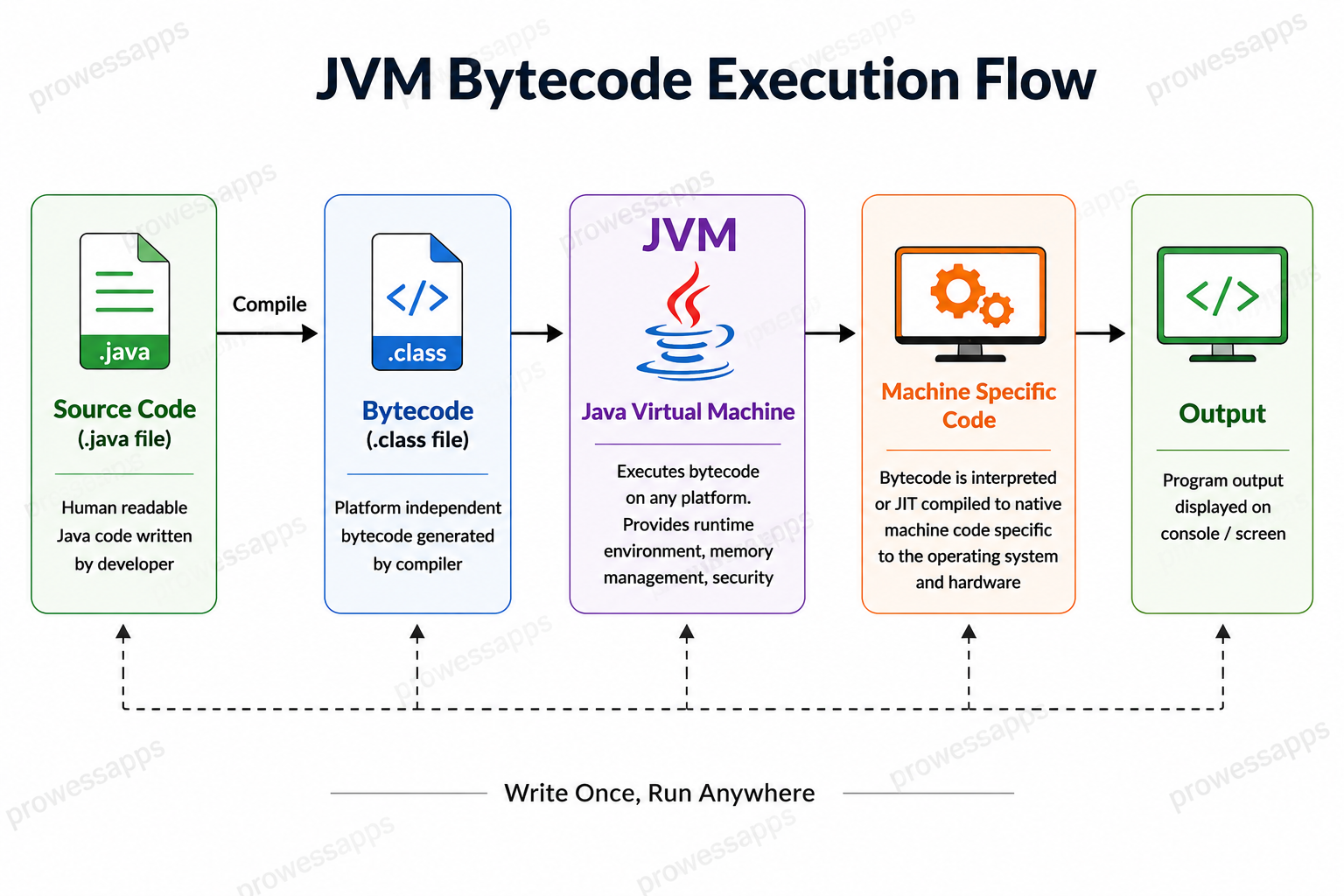
One of the biggest reasons behind Java's success was the idea of Write Once, Run Anywhere. Java code is compiled into bytecode, and bytecode can run on any system that has a JVM.
Java History Timeline
1991 - The Beginning
Green Project started at Sun Microsystems. James Gosling begins work on a new programming language.
1992 - Oak is Born
The language is named "Oak" after a tree outside Gosling's office. *7 (Star Seven) device is created.
1994 - WebRunner
First web browser written in Java (later renamed HotJava). The team pivots focus to the World Wide Web.
1995 - Java is Born
Oak is renamed to Java. Publicly announced at SunWorld conference. Netscape announces JavaScript support.
1996 - JDK 1.0 Released
First official release on January 23, 1996. "Write Once, Run Anywhere" becomes Java's slogan.
2006 - Open Source
Sun releases Java as open source under GPL license (OpenJDK).
2010 - Oracle Era
Oracle completes acquisition of Sun Microsystems.
2017 - New Release Model
Starting with Java 9, Oracle adopts 6-month release cycle.
2023 - Java 21 LTS
Long-Term Support release with Virtual Threads and modern features.
2025 - Java 25 LTS
Latest Long-Term Support release of the Java SE Platform.
Complete Java Version History
| Version | Release Date | Codename | Major Features | LTS? |
|---|---|---|---|---|
| JDK 1.0 | January 1996 | Oak | First public release | - |
| JDK 1.1 | February 1997 | - | Inner classes, JavaBeans, JDBC, RMI | - |
| J2SE 1.2 | December 1998 | Playground | Collections Framework, Swing, JIT compiler | - |
| J2SE 1.3 | May 2000 | Kestrel | HotSpot JVM, JNDI | - |
| J2SE 1.4 | February 2002 | Merlin | assert keyword, NIO, Regular Expressions | - |
| Java SE 5 | September 2004 | Tiger | Generics, Annotations, Autoboxing, Enums, Varargs, Enhanced for-loop | - |
| Java SE 6 | December 2006 | Mustang | Scripting support, JDBC 4.0, improved performance | - |
| Java SE 7 | July 2011 | Dolphin | try-with-resources, Diamond operator, NIO.2 | - |
| Java SE 8 | March 2014 | - | Lambda expressions, Stream API, Optional, Date/Time API | ✅ LTS |
| Java SE 9 | September 2017 | - | Module System (Jigsaw), JShell, HTTP/2 Client | - |
| Java SE 10 | March 2018 | - | Local variable type inference (var) | - |
| Java SE 11 | September 2018 | - | HTTP Client, String methods, Local-Variable Syntax for Lambda | ✅ LTS |
| Java SE 17 | September 2021 | - | Sealed classes, Pattern matching for switch (preview) | ✅ LTS |
| Java SE 21 | September 2023 | - | Virtual Threads, Pattern Matching, Record Patterns | ✅ LTS |
| Java SE 25 | September 2025 | - | Latest Long-Term Support release | ✅ LTS (Current) |
Java today
Today, Java is used for object-oriented enterprise applications, Android development, and multithreaded backend services.
Lesson summary
- Java was developed by James Gosling and his team at Sun Microsystems.
- Java started as part of the Green Project and was first named Oak.
- Oak was later renamed Java and became popular because of platform independence and WORA.
- Java was publicly announced in 1995, and JDK 1.0 was released in January 1996.
- Millions of applications worldwide still run on Java today.
Frequently asked questions
Who developed Java?
Java was developed by James Gosling and his team at Sun Microsystems in the early 1990s.
What was the original name of Java?
The original name of Java was Oak, named after an oak tree that stood outside James Gosling's office.
What was the Green Project in Java history?
The Green Project was the original initiative started in 1991 to create a programming language for consumer electronic devices, which eventually led to the creation of Java.
When was Java publicly released?
The first public version of Java (JDK 1.0) was released in January 1996.
Why was Java originally called Oak?
Java was originally called Oak because there was an oak tree visible outside James Gosling's office window at Sun Microsystems. The name had to be changed because "Oak" was already trademarked by another company.
Why is James Gosling called the father of Java?
James Gosling is called the "Father of Java" because he was the lead designer and primary creator of the Java programming language at Sun Microsystems starting in 1991.
Is Java owned by Oracle or Sun?
Java is currently owned by Oracle Corporation. Oracle acquired Sun Microsystems (the original creator of Java) in 2010 for approximately $7.4 billion.
What is the latest version of Java?
As of 2026, Java 25 is the latest Long-Term Support (LTS) version, released in September 2025. Java follows a 6-month release cycle, so newer non-LTS versions may be available.
How old is Java programming language?
Java was first publicly released in 1995, making it over 29 years old. Development began in 1991 as part of the Green Project at Sun Microsystems.
Check your knowledge
Free learner features
Save your learning progress
Sign in to mark lessons as completed, save your Java learning progress across devices, and participate in lesson discussions.
Sign in to track progressDiscussion
Ask questions, share suggestions, or discuss this lesson.
No approved comments yet. Start the discussion by asking a helpful question.
